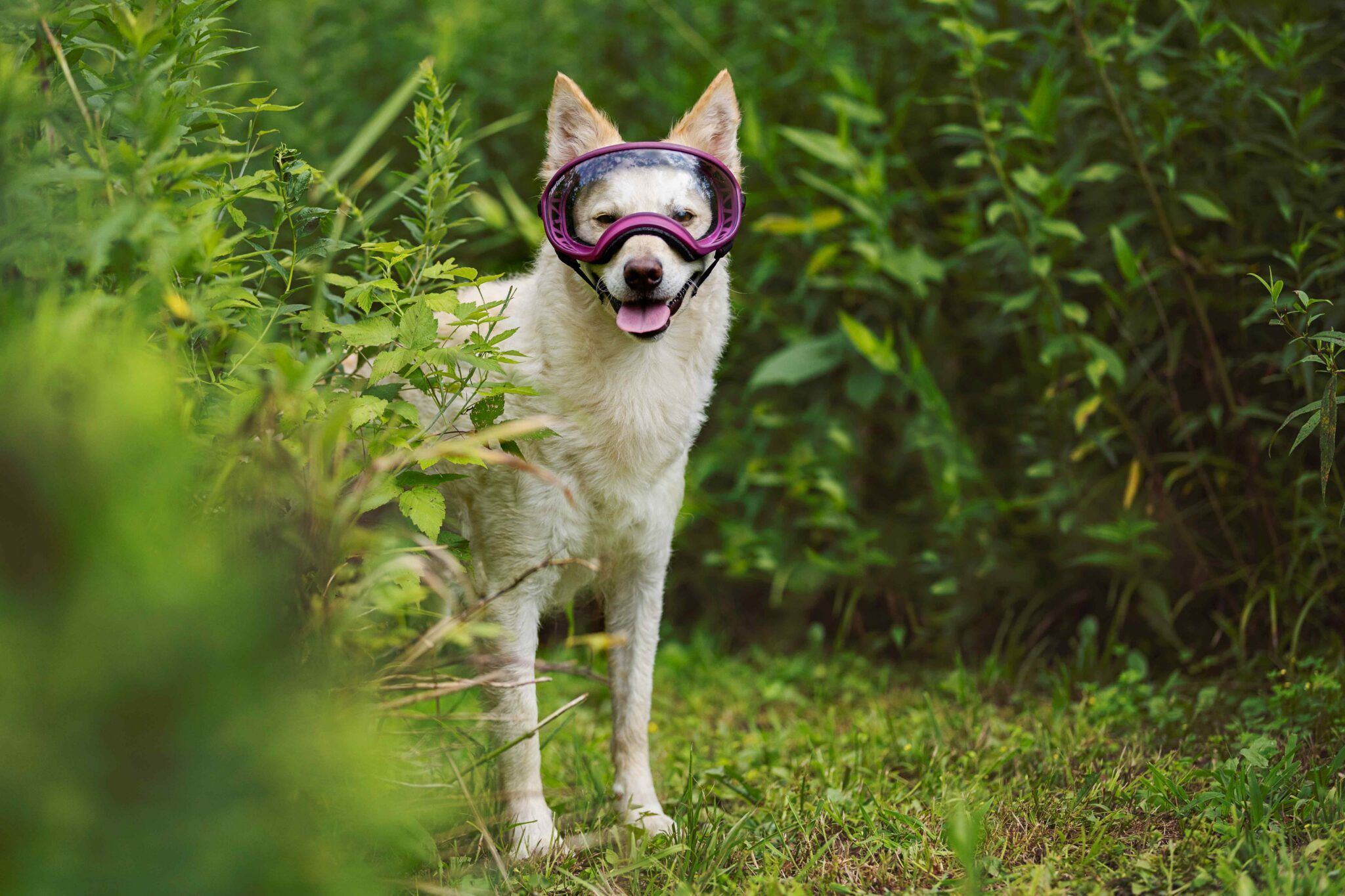
 Rex Specs, shown here, are designed with a single lens to give active dogs a wide field of view without sacrificing eye protection. Credit: Emily Buerger
Dog goggles are available for everything from safety to style. Military dogs in harsh environments, water-loving dogs, and dogs with eye injuries are just a few of those who benefit from wearing dog eye protection.
Why Consider Dog Goggles?
This strap-on eyewear is designed to fit canine faces and offers UV protection and impact-resistant lenses for dogs who enjoy active lives and activities such as:
 Cockapoo Paisley likes to go for rides on her person’s electric bike. Goggles protect her eyes from dirt, debris, and wind. Credit: Courtesy of Kim Campbell Thornton
- Hiking
- Riding in motorcycle sidecars or bike baskets
- Running alongside bicycles
- Catching balls or flying discs
- Playing on the beach or in the water
- Boating, paddleboarding, or surfing
- Participating in search and rescue efforts
When Protective Eyewear for Dogs Can Help
Those are just a few of the activities where goggles for dogs can come in handy. Others include eye protection during laser treatments or lolling in a wading pool on a hot day. Dogs diagnosed with pannus (aka chronic superficial keratitis), a UV-light-induced disease most commonly seen in German Shepherds, may benefit from tinted eyewear that reduces UV light exposure. It might help prevent the disease from worsening, especially in dogs who spend a lot of time outdoors.
Protective eyewear is also useful for dogs recovering from surgery or an eye injury, such as a scratched or ulcerated cornea. I wish I’d thought to get a pair for Sparkles a few months ago for just that reason. She hates wearing an e-collar and she was always running into furniture and walls with it. Goggles might have been less troublesome for her, as well as preventing her from scratching at or rubbing her eyes while they healed.
While dogs with normal, healthy eyes don’t run too much risk of damage from bright sunlight, protective eyewear reduces glare, adding to canine comfort. It can prevent injury from foxtails, protruding brush, plants with thorns, and blowing debris, dirt, and sand.
Pets can also benefit from dog glasses if they have large, protruding eyes that may be easily injured. Think Boston Terriers, Cavaliers, English Toy Spaniels, French Bulldogs, and Pugs. Dog trainer Mikkel Becker put protective eyewear on her flat-faced dogs Indiana Bones and Otis when introducing them to foster cat Mylo, who was prone to scratching when afraid. The eyewear protected their eyes from the risk of cat claw damage.
Specs for Senior Dogs
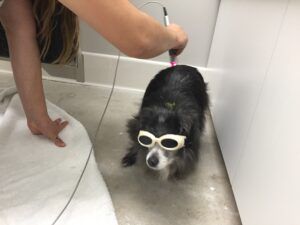 Timmy, a Tibetan Spaniel, wears protective goggles when he gets laser treatments to help improve mobility. That’s a common reason for dogs to wear spectacles, but it’s not the only one. Credit: Courtesy of Kim Campbell Thornton
It’s not only aging humans who may need to get glasses. While canine corrective lenses aren’t a thing, dogs who are getting on in years can have more difficulty regulating the amount of bright light entering their eyes.
“Dogs with conditions that cause persistently dilated pupils, such as iris atrophy due to aging, can be light-sensitive. These dogs can benefit from tinted goggles that block out some of the light from entering the eye, especially when out in bright light,” says veterinary ophthalmologist Cindy Mar.
That’s because the iris, the colored part of the eye that surrounds the pupil, is a muscle. Like any muscle, it can weaken over time, becoming less able to control dilation and constriction of the pupil to manage light filtration. If you notice your senior dog squinting on a sunny day, tinted eyewear might help.
Other Uses for Canine Eyewear
Sometimes, when a dog is easily frightened by crowds or visual stimuli, tinted eyewear may help them remain calm and reduce anxiety caused by bright or flashing lights, in much the same way as blinders do for horses. With positive conditioning, certain types of protective eyewear can potentially help reduce reactivity to things that might frighten dogs.
Finally, canine eyewear can just be a fun fashion statement for dogs and their people. After all, who doesn’t look better in a chic pair of sunnies? For dogs who enjoy strutting their stuff and interacting with people, wearing cool shades can bring them the attention they crave.
Popular Brands for Dog Goggles
Probably the best-known brand of canine eyewear is Doggles — the name being a mashup of “dog” and “goggles.” It’s closely followed by Rex Specs, but there are quite a few other brands, many of which get good reviews.
| Product | Price | Sizes | Notes |
|---|---|---|---|
| Doggles Originalz | $21 | XS, S, M, L | Adjustable elastic head and chin straps, UV protection, anti-fog, shatterproof. Best for dogs with recessed eyes. |
| NAMSAN Dog Sunglasses | $14–$24 | M, L | TPE frame, 2 adjustable elastic straps, UV-resistant, anti-glare, wide design. Designed for medium- and large-sized dogs. |
| Ownpets Dog Goggles | $14 | S/M | Silicone frame with vents, 2 adjustable straps, UV-resistant, shatter resistant. Designed for small- and medium-sized dogs. |
| PetLeso Dog Goggles | $10–$25 | XS, S, M, L | TPU frame with vents, 2 adjustable straps, UV protection. |
| Protective Pet Solutions OptiVizor | $48–$68 | Mini, Toy, S, S/M, M, L, XL | Adjustable Velcro collar and chin strap, trimmable visor, UV protection. Designed for medical and recreational use. |
| Rex Specs V2 | $93 | XS, S, M, L, XL | Flexible, vented frame, single lens, adjustable straps, UVA/UVB protection, impact-resistant lenses. |
How to Choose the Right Dog Goggles for Your Dog
When selecting goggles, consider your dog’s face shape and eye placement. Dogs with recessed eyes fit differently than those with large, protruding eyes, so look for brands and styles designed with your dog’s facial structure in mind. Check that the frame material is flexible and comfortable, that the straps are fully adjustable, and that the lenses offer adequate UV protection for your intended use. If your dog needs goggles for a medical reason, consult your veterinarian or a veterinary ophthalmologist before purchasing to ensure you select a product appropriate for the specific condition.