
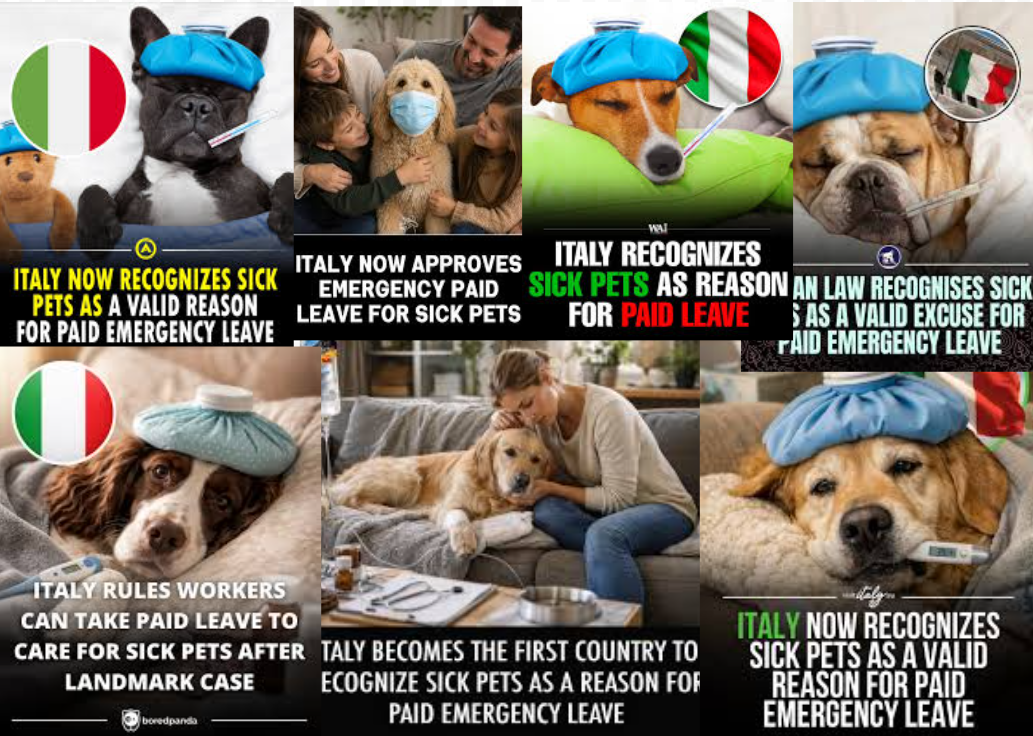
You might have seen some news making the rounds recently about a wonderful policy in Italy that allows pet owners to take up to 3 days paid leave to take care of a sick pet. Although it is unclear as to why this has suddenly found its way to the top of the news pile, being that it’s based on a court case that is almost ten years old, it does highlight the contrasting ways in which different countries and companies allow their employees to provide for their four-legged family members.
The landmark case took place in Rome, Italy, in 2017, when a university employee successfully won a legal case against her employer that afforded her the right to use paid time off to seek treatment for her beloved English Setter, Cucciola. As the dog’s only caregiver, the argument was made that by not taking time off work to take her pet to the vet, Cucciola’s owner would actually be violating the Italian law against leaving an animal suffering. The ruling in her favor effectively set a legal precedent that has emboldened subsequent pet owners to also take time off work to take care of their pets. Despite numerous posts claiming that Italian law now recognises a sick pet as a valid reason for paid emergency leave, there is no such national policy in place… yet.
According to a partner at a top Italian Employment and Industrial Relations Law Firm, “there do not appear to be any regulations currently in force in the Italian system that recognise this right.” However, this may soon change. “On 15 June 2025, MP Devis Dori, a member of AVS, introduced a bill aimed at amending Law 53/2000 on parental and family leave, explicitly including leave for the care of pets. The new law would grant the right to two days’ paid leave in the event of a pet’s death and an annual allowance of six hours for illness or urgent veterinary treatment.” This law would only apply to dogs and cats at this stage, being the only animals traceable, given the obligation to register them via microchip, and evidence provided in the form of veterinary advice would be required. The bill is currently assigned to the XI Labour Committee, but has not yet been passed, so it would appear that the thousands of unnervingly similar images that have been circulating around social media over the past few weeks may have jumped the gun. But it renewed attention to the topic of paid time off for pet care.
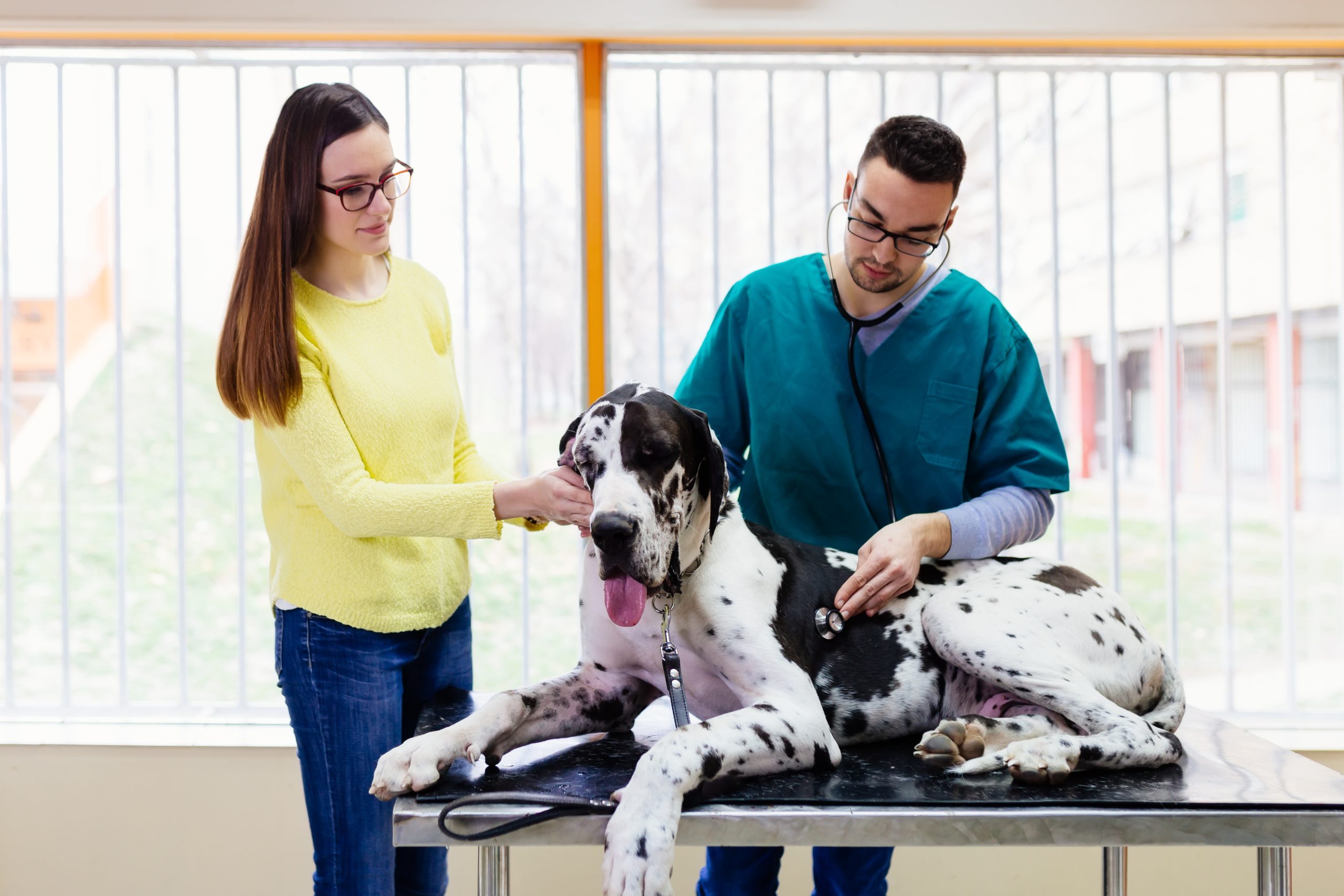 Image Credit: hedgehog94, Shutterstock
What Is Pawternity Leave?
As a non-smoker without children, I often resented the many smoke breaks taken by colleagues on company time, and sometimes wondered if there was a way to score some maternity leave without the actual inconvenience of having a child, but perhaps ‘pawternity leave’ is where I can finally turn things around. Although the term was initially coined to apply specifically to the rather unique situation of employers allowing team members to take a period of time off work to settle in a new pup, pawternity leave is sometimes used as an umbrella term to include any and all approved time off work to deal with a pet-based issue. It has become abundantly clear over the last century or so that the human-animal bond has gone from strength to strength, with public policy, healthcare, retail markets, and even psychology shifting to accommodate and encourage the important role that dogs, cats, and other companion animals play in our lives. The idea that this important relationship ought to be incorporated in our labor laws and employment conditions shouldn’t seem so far-fetched. Of course, many employers seem to have difficulty in providing even the most basic holiday benefits to their staff, so one might cynically expect to only see provisions made for our pets in a workplace agreement when preceded by the words “Once upon a time…”
However, more and more countries and companies are turning the fantasy of paid pet care leave into a reality.
Turning Fantasy Into Reality… With Beer
Back in 2007, two guys named James Watt and Martin Dickie decided they were fed up with the stuffy UK beer market, and with the aid of some very scary bank loans, started making their own hardcore craft beers in northeast Scotland. From humble beginnings brewing tiny batches sold at local markets out of a beaten-up old van, the brand BrewDog was born. Fast-forward ten years - around the same time that Cucciola was making history for Italian dogs - the dog-loving team at BrewDog decided to include a unique employee benefit: Pawternity Leave, a paid week off to welcome, settle, and bond with a new pet.